Australia
Labor abandoned its FOI overhaul in March, and an audit has since found the system failing
The Freedom of Information Amendment Bill 2025 was pulled from the Senate on 5 March 2026 rather than face defeat. An Auditor-General's performance audit released on 20 May found agency administration of the FOI Act only partly effective, and no replacement bill has been introduced.
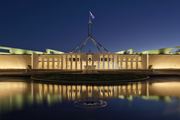
The Albanese Government abandoned its rewrite of the Freedom of Information Act on 5 March 2026, pulling the Freedom of Information Amendment Bill 2025 out of the Senate rather than lose a vote on it. Finance Minister Katy Gallagher told the Senate that morning that the Government accepted the Bill would not pass in its current form, SBS News and the Canberra Times both reported that day.
Gallagher said the Government had "an open mind and we'll continue to engage on the final form of the important reforms" it would bring back to Parliament, SBS News reported. As at mid August 2026, no replacement bill has been introduced.
The Bill was introduced on 3 September 2025, the date given both by the law firm Sparke Helmore, which published a note on it that day, and by the Law Society Journal in its 25 March 2026 account of the reversal.
Sparke Helmore recorded three of its central mechanisms. It created a discretionary processing cap of 40 hours, above which an agency could declare a practical refusal reason. It allowed application fees to be prescribed by regulation for FOI requests, internal reviews and Information Commissioner reviews, excluding requests by a person for their own personal information. And its Schedule 2 provided that a request could not be made anonymously or under a pseudonym.
Norton Rose Fulbright's October 2025 guide for Commonwealth agencies set out the rest. Statutory timeframes would shift from calendar days to working days. The Cabinet documents exemption would widen, so that Cabinet consideration needed to be a substantial rather than a dominant purpose of a document's preparation. New factors would be written into the deliberative process exemption. Agencies would gain power to refuse vexatious, harassing or abusive requests outside the usual 30-day decision period, and live requests would transfer automatically when a minister left office.
The Senate referred the Bill to its Legal and Constitutional Affairs Legislation Committee, which reported on 3 December 2025. The majority recommended that the Senate pass it. That recommendation did not survive contact with the chamber.
Coalition, Greens and crossbench senators each lodged dissenting reports. Independent senator David Pocock said on 3 December that 69 submissions had been made to the inquiry, that only government departments and agencies supported the Bill outright, and that it was "a bad bill with no friends". PS News reported the following day that Senator Jacqui Lambie's dissent called the Bill "a disgraceful attack on open and accountable government", and that the Liberal deputy chair, Senator Leah Blyth, said it was "unwarranted and undemocratic".
Much of the Government's public case had rested on the claim that automated tools and foreign actors were flooding FOI units. SBS News reported that during the inquiry departments could not produce evidence to support claims about AI bots or criminal or foreign actors misusing the system. Greens senator David Shoebridge told the Canberra Times that the threat to the public's right to know "isn't from Russian bots, it's from the Labor cabinet". Writing in the Law Society Journal in March 2026, Cat Woods reported that the Centre for Public Integrity had examined the bot claims and found no evidence for them.
The Canberra Times reported that Shadow Attorney-General Michaelia Cash called the Bill's failure a "win for democracy". In a joint civil society statement published by Grata Fund on 5 March, Rex Patrick, founder of the Whistleblower Justice Fund, said the outcome was "a victory for civil society", and Kieran Pender, associate legal director at the Human Rights Law Centre, said freedom of information was "vital to a healthy, transparent, and accountable democracy".
Ten weeks later the argument moved from the Bill to the system it was supposed to fix. A performance audit of the administration of the FOI Act was released on 20 May 2026. Sparke Helmore, summarising it on 28 May, said the Auditor-General found administration of the Act "partly effective", having examined 1,111 requests for non-personal information that were active during 2024 at three departments. Documents were provided in 43 per cent of those requests. In 79 per cent there was no proper evidence that reasonable searches for documents had been made, and in 30 per cent no record of the decision itself beyond the notice sent to the applicant. Nine recommendations were made and all were accepted.
The Centre for Public Integrity, which put the audited entities as the Department of the Prime Minister and Cabinet, the Treasury and the infrastructure and communications department, said on 20 May that Treasury had no finalised FOI policies or procedures in place at all. Its executive director, Dr Catherine Williams, said the report "must be a wake-up call for government to start taking FOI reform seriously". The Office of the Australian Information Commissioner said the same day that it welcomed the audit and had agreed to the recommendations directed at it, including advising on a Commonwealth-wide case management system for FOI requests.
What has not happened is a review. On the day the Bill was withdrawn, Williams said the Centre had "consistently called for a comprehensive review" of the FOI system rather than merely the Bill's withdrawal, and it convened a roundtable of former commissioners, parliamentarians, journalists and OAIC representatives that month. The Government has not announced an independent review, and Gallagher's undertaking to return with reforms remains outstanding. The open questions are whether a second bill keeps the application fees and the ban on anonymous requests that killed the first one, and whether the Auditor-General's findings on record keeping and search practice are answered by legislation, by resourcing, or not at all.
Sources
Every factual claim above rests on the 12 published sources below. They are listed so you can check the reporting rather than take it on trust.
- SBS NewsGovernment's controversial freedom of information reforms dropped after broad opposition
- The Canberra TimesLabor scraps controversial freedom of information bill
- Grata Fund (joint civil society release)The Albanese Government kills off its own FOI secrecy bill in the face of political defeat
- The Centre for Public IntegrityWithdrawal of FOI Amendment Bill must mark the start of genuine reform
- Law Society JournalGovernment backs down on FOI law reforms
- Sparke Helmore LawyersThe FOI Amendment Bill introduced to Parliament
- Norton Rose FulbrightA guide to proposed Freedom of Information reforms in Australia: What they mean for Commonwealth agencies
- PS News'A disgraceful attack on open and accountable government': Furious dissent against Labor's FoI changes
- Senator David Pocock (media release)Senate inquiry condemns deficient FOI bill
- Sparke Helmore LawyersAustralia's FOI system under review: key findings from the Auditor-General
- The Centre for Public IntegrityANAO audit confirms Australia's FOI system is failing the public
- Office of the Australian Information CommissionerStatement on Australian National Audit Office report