Measurement and data
Australia scored 76 on an index that counts perceptions of corruption, not corruption
Transparency International published its 2025 Corruption Perceptions Index on 10 February 2026. Australia fell one point to 76 out of 100 and from equal 10th to equal 12th. The global average dropped to 42. The index rests on 13 data sources, none of which count a single corrupt act.
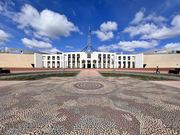
Transparency International published the 2025 Corruption Perceptions Index on 10 February 2026. Australia scored 76 out of 100, one point lower than the year before, and slipped from equal 10th place to equal 12th. The global average fell to 42, which the organisation says is the first drop in more than a decade. The figures travelled quickly. What travelled less well is what the number is.
The index report states its own terms plainly on page 11. It ranks 182 countries and territories "according to the levels of public-sector corruption perceived by experts and businesspeople", it relies on 13 independent data sources, and it runs from zero, meaning a public sector seen as highly corrupt, to 100, meaning very clean. Every word of that sentence is doing work. The unit of measurement is a judgment formed by an expert or a businessperson, aggregated and rescaled. No prosecution, audit finding or bribe is counted anywhere in it.
The rescaling matters too. A footnote in the same report records that Transparency International changed the method in 2012 and now rescales each source using the global mean and standard deviation from that year. The consequence, stated by the publisher itself, is that scores from 2012 onwards can be compared and earlier ones cannot. So Australia's frequently quoted peak of 85 in 2012 is the base year, not a lost golden age measured on the same instrument as anything before it.
On the global picture the report is blunt. Of the 182 countries scored, 122 sit below 50. The number scoring above 80 has fallen from 12 a decade ago to five. Denmark topped the table for the eighth consecutive year on 89. Somalia and South Sudan scored 9, Venezuela 10. The report also names a group of higher scoring democracies that have slipped from their own baselines since 2012: the United States on 64, Canada 75, the United Kingdom 70, France 66, Sweden 80, New Zealand 81 and Chile 63. Australia's 76 puts it level with Estonia, Hong Kong and Ireland.
Transparency International sets one striking correlation alongside the scores. Grouping countries by the CIVICUS Monitor's civic space classification, average 2025 scores run 68 for open, 51 for narrowed, 38 for obstructed, 32 for repressed and 30 for closed. It reports that 36 of the 50 countries whose scores have significantly declined have also seen civic space reduced, and that 150 journalists covering corruption have been murdered in non-conflict settings since 2012, more than 90 per cent of them in countries scoring below 50. That is an association across the dataset. The report does not, and on this evidence cannot, establish which way the causation runs.
The organisation is also explicit about the index's blind spots. Its own findings page says the measure focuses on domestic public-sector corruption and does not comprehensively capture private-sector bribery or cross-border illicit financial flows. Nor does it record whether ordinary people were asked for a bribe. A country can therefore score well on expert perception while the experience of citizens goes unmeasured.
The Australian explanation offered for the fall is money in politics. Transparency International Australia's chief executive, Clancy Moore, said the result showed "integrity reform in Australia needs renewed commitment, not complacency", and its chair, Professor A J Brown, called for a re-commitment to integrity reforms. The organisation points to 138 million dollars of donations with no known source flowing to political parties before the 2025 election.
That claim can be tested against an official record rather than a perception. On 2 February 2026 the Australian Electoral Commission published the 2024 to 2025 annual financial disclosure returns on its Transparency Register. The disclosure threshold for that year was 16,900 dollars, indexed each 1 July. The commission reported that 87 per cent of registered entities lodged returns by the 20 October 2025 deadline and that four returns were still outstanding at publication. Crikey's analysis of those returns, published 3 February 2026, put at least 130 million dollars of party income for the year in the undisclosed category. None of that is a finding of corruption by anyone. It is a measure of what the law does not require to be shown.
Two of the sources disagree with themselves. The commission's media release says the new funding and disclosure scheme commences on 1 July 2026, while its own reform page says the legislative changes commence on 1 January 2027 with transitional rules from 1 July 2026. Transparency International's United States site describes the index as ranking 180 countries on the same day the report says 182.
What is not known is whether any of this moves the number. The 2027 disclosure regime will not appear in expert assessments for years, and the report offers no statement on whether a one point shift in a country score is distinguishable from noise.
Sources
Every factual claim above rests on the 10 published sources below. They are listed so you can check the reporting rather than take it on trust.
- Transparency InternationalCorruption Perceptions Index 2025 (full report, PDF)
- Transparency InternationalCorruption Perceptions Index 2025
- Transparency InternationalCorruption Perceptions Index 2025: Decline in leadership undermining global fight against corruption
- Transparency InternationalCPI 2025: Findings and insights
- Transparency International AustraliaAustralia drops in corruption ranking amid global backslide
- Transparency International Australia2025 Corruption Perceptions Index (CPI)
- Transparency International U.S.Transparency International Release Latest Corruption Perceptions Index
- Australian Electoral Commission2024-25 annual financial disclosure return information to be published on Monday 2 February 2026
- Australian Electoral CommissionFunding and disclosure legislative changes
- CrikeyMajor parties collect over $130m in dark money donations