Technology
Meta's display glasses never left the United States, and its cheapest AI glasses now start at $469 in Australia
Meta paused the Ray-Ban Display's international launch in January and has not set new dates. The screenless own-brand frames it released instead reached the Australian store in June from A$469.
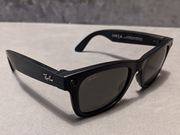
Meta's Ray-Ban Display, the glasses with a small screen set into the right lens, has still not gone on sale outside the United States.
On 6 January 2026 the company said it was pausing the international launch it had promised for Canada, France, Italy and the United Kingdom in early 2026. In a statement quoted by TechCrunch, Meta said: “Since launching last fall, we've seen an overwhelming amount of interest, and as a result, product waitlists now extend well into 2026.” It added: “Because of this unprecedented demand and limited inventory, we've decided to pause our planned international expansion.” CNBC, Engadget and Forbes reported the pause the same week. Meta has not announced new dates for any of those four markets.
Australia was not in that first wave, and Meta has not said when, or whether, the Display will be sold here.
What Australians can buy instead is Meta's own brand line. On 23 June 2026 Meta launched glasses under its own brand for the first time, starting at US$299. TechCrunch reported three styles, the Meta Adventurer, the Meta Fury and Meta Glasses by Kylie, made in collaboration with Kylie Jenner. They have no display. They carry a camera, open ear speakers and a button that summons Meta AI, with claimed battery life above eight hours and a charging case adding up to 40 hours. They went on sale that day in the United States, Canada, the United Kingdom, France, Italy, Germany, Spain and other European markets. The Australian technology site EFTM reported the same range on Meta's Australian store from A$469, with the Kylie Jenner edition at A$629.
That is the shape of the market Meta has actually built: cheap camera glasses with a voice assistant, not augmented reality. EssilorLuxottica, which manufactures the frames, told investors on 11 February 2026 that it had more than tripled sales of Meta AI glasses during 2025. CNBC and Road to VR reported the figure as more than seven million units for the year, against roughly two million across 2023 and 2024 combined. Almost all of that volume is the screenless product.
The competitive picture has also changed. On 16 June 2026, a week before Meta's own brand launch, Snap unveiled its first consumer Specs at the Augmented World Expo in Long Beach at US$2,195, with pre-orders open and shipping in the United States, the United Kingdom and France, according to CNBC. Snap's price sits at nearly three times the Display's.
The Display's public debut did not go smoothly. Meta's chief technology officer Andrew Bosworth said the demonstration failures at the September 2025 Connect keynote were not caused by the Wi-Fi, as reported by TechCrunch on 19 September 2025. There were two separate failures. In a cooking segment, the Live AI feature told the creator Jack Mancuso he had already combined his ingredients while he stood in front of an empty bowl. In a second demonstration, a WhatsApp video call would not connect. Mark Zuckerberg said on stage: “I don't know what happened.”
On the hardware itself, Meta states up to six hours of mixed use for the Display glasses, up to 30 hours in total with the charging case, up to 18 hours for the Neural Band, and a price of US$799 including the band. The Neural Band is described as translating the signals created by muscle activity into commands, is rated IPX7, and is built with Vectran. Figures of 600 by 600 pixel resolution, a 90 Hz refresh rate and 5,000 nit brightness have circulated in secondary coverage but do not appear in Meta's own announcement.
Development has continued for the small United States user base. At CES in January 2026 Meta said it was rolling out a teleprompter feature and handwriting input, letting a wearer write with a finger on any surface to send WhatsApp and Messenger messages, and showed a proof of concept linking the Neural Band to Garmin's Unified Cabin car infotainment system.
The privacy questions attach to a different device here. The glasses Australians can actually buy have a camera and a microphone, no screen and no gesture band, and they are sold through Meta's Australian store and optical retailers. No Australian regulatory guidance specific to camera glasses has been published.
What happens next depends on supply. Meta has given no date for restarting the international rollout, has not published Display sales figures, and has not said whether the paused markets will be served before a second generation of the product arrives.
Sources
Every factual claim above rests on the 13 published sources below. They are listed so you can check the reporting rather than take it on trust.
- TechCrunchMeta pauses international expansion of its Ray-Ban Display glasses
- CNBCMeta delays Ray-Ban Display glasses global rollout due to inventory limits, U.S. demand
- EngadgetMeta has delayed the international rollout of its display glasses
- ForbesMeta Ray-Ban Display Smart Glasses Are Delayed, Company Admits
- MetaMeta Ray-Ban Display: AI Glasses With an EMG Wristband
- TechCrunchMeta debuts new, cheaper smart glasses under its own brand
- CNBCMeta announces new smart glasses starting at $299, as Zuckerberg keeps pushing wearables
- EFTMNew range of Meta Smart Glasses hit Australian storefronts with a lower price tag
- CNBCRay-Ban maker EssilorLuxottica says it more than tripled Meta AI glasses sales in 2025
- Road to VRMeta Sold Over 7 Million Smart Glasses Last Year, Effectively Tripling Sales in 2025 Alone
- CNBCSnap unveils $2,195 Specs AR glasses, Spiegel bets on post-smartphone future
- TechCrunchMeta CTO explains why the smart glasses demos failed at Meta Connect, and it wasn't the Wi-Fi
- MetaCES 2026: Meta Ray-Ban Display Teleprompter, Neural Handwriting, Industry and Research Collaborations