Shipping and energy markets
Two ships crossed the Strait of Hormuz on 14 August and no crude at all, against 130 a day before the war
Kpler tracking data cited by Reuters put Hormuz transits at two vessels on Friday 14 August 2026, nine on the Thursday and five on the Wednesday, with no crude oil shipments visible on the Friday. The strait normally carries about a fifth of the world's oil and LNG.
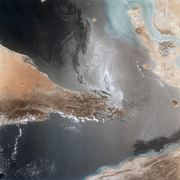
The most consequential number in the world economy this week is a ship count, and it is in the single digits. Ship tracking firm Kpler, cited by Reuters, recorded two vessels transiting the Strait of Hormuz on Friday 14 August 2026: a grain ship heading for Iran and an empty dry bulk carrier. An empty liquefied petroleum gas tanker was separately detected entering the Gulf. No crude oil shipments were visible at all that day. On Thursday 13 August nine ships passed. On Wednesday 12 August, five. Before the war that began in February 2026, the strait carried more than 130 vessels a day.
The counts vary slightly by source and by day, which is worth stating plainly rather than smoothing over. Daily Sabah reported eight vessels on Tuesday 11 August against a pre war average it put at 130 to 140, and a 10 day average during the conflict of about 12. Reuters likewise noted that nine crossings on the Thursday sat below an average of 12 for August, a figure already far below normal. Kpler's data also cannot see vessels that have switched off their transponders, so the true count may be marginally higher than the tracked one.
What passes through the strait is the reason any of this matters. The United States Energy Information Administration calculated that in 2022 about 21 million barrels a day moved through Hormuz, roughly 21 per cent of global petroleum liquids consumption and more than a quarter of all seaborne traded oil, and that around one fifth of global liquefied natural gas trade also transited the waterway. A day with zero crude transits is not a slow day. It is an interruption to about a fifth of the world's oil.
The military position hardened this month. A blockade of all vessels entering and leaving Iranian ports took effect on 13 April 2026. A ceasefire agreed in June lifted it for about a month. Talks then stalled, the blockade was reimposed, and on Thursday 13 August two Abu Dhabi National Oil Company vessels were attacked while transiting the strait. The United Arab Emirates blamed Iran, which made no immediate comment. Reuters and United News of India agree on that point; neither reports a denial.
Speaking in Panama City on 13 August, aboard a Navy ship during a multinational exercise, United States Defense Secretary Pete Hegseth said the Navy could keep the blockade going "indefinitely" because "we'll rotate ships in and out, as we have, and we'll continue to". Treasury Secretary Scott Bessent said Washington would apply measures "like have never been seen in the history of economic isolation on a country". Iran's position, as reported by Daily Sabah, is that sanctions must be removed and frozen assets released before the strait reopens. A senior Iranian source told Reuters on Wednesday 12 August that there had been no progress in talks aimed at building on the June agreement to end the war. Those two positions are not close, and neither side has moved publicly.
Markets have been trading the rumour rather than the ship count. On 5 August 2026, on reports of progress in Oman brokered talks on safe passage, the S&P 500 rose 1.8 per cent to close above 7,700 for the first time, beating its previous record of 7,620.90 set on 2 June. The Dow Jones Industrial Average rose 1.7 per cent to 54,085.88, a second consecutive record. Brent crude had fallen about 5 per cent overnight, with October futures then at 79.98 dollars a barrel. United States Secretary of State Marco Rubio said he hoped an agreement would happen very shortly. Iran's foreign ministry spokesperson Esmaeil Baghaei described the Oman talks as positive. Nine vessels transited that Sunday. Nine days later the count was two.
The physical evidence points the other way from the diplomacy. On 31 July, market analysts noted Iran had stopped two tankers from leaving the strait and turned four more around, and that Saudi Arabia had responded by proposing a multinational defence coalition for the waterways it needs to keep open. The consequences are already reaching agriculture: the Food and Agriculture Organization has estimated that exports of between 20 and 45 per cent of key agrifood inputs, fertiliser above all, rely on passage through the strait. The organisation's chief economist, Maximo Torero, named Bangladesh and Sri Lanka as the countries affected right now by the lack of fertiliser, with Sudan and Kenya also needing access.
Three things are not known. Whether the Oman channel is still open at all. Whether the blockade's cost is being borne mainly by Iran or by the importing countries that have lost the crude. And whether a naval blockade sustained by rotating warships is a policy with an end state, or simply a condition.
Sources
Every factual claim above rests on the 8 published sources below. They are listed so you can check the reporting rather than take it on trust.
- SBS News (Reuters)Strait of Hormuz traffic falls to a handful of ships as US blockade holds
- United News of IndiaTransit through Strait of Hormuz grounds to near zero amid increasing attacks and US threats of indefinite blockade of Iran
- Daily SabahUS vows to maintain Iran blockade indefinitely as cease-fire talks stall
- The Times of IsraelUS can keep naval blockade on Iranian ports indefinitely, Hegseth says
- Al JazeeraUS stock market hits record high amid hopes for Strait of Hormuz reopening
- US Energy Information AdministrationThe Strait of Hormuz is the world's most important oil transit chokepoint
- ABC NewsStrait of Hormuz blockade could turn into global agrifood crisis
- FXEmpireOil News: Hormuz ship counts keep crude oil futures bid despite weak demand