Student debt
Two federal judges vacated the same student loan forgiveness rule on the same day, on different grounds
On 30 June 2026 Judge Myong Joun in Boston and Judge Amir Ali in Washington each set aside the Education Department's rule disqualifying employers with a "substantial illegal purpose" from Public Service Loan Forgiveness. Joun found it unconstitutional as well. Ali decided on the statute alone.
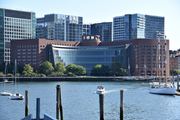
On 30 June 2026 two federal district judges, sitting more than 600 kilometres apart, each vacated the same Education Department rule on Public Service Loan Forgiveness. They did not reach the same conclusions. One struck the rule down on statutory, administrative and constitutional grounds. The other struck it down purely on statute and expressly declined to decide the rest.
The rule is the William D. Ford Federal Direct Loan Program final regulations, 90 FR 48966, published 31 October 2025 and due to take effect on 1 July 2026. It followed a presidential executive order of 7 March 2025 saying the programme had "misdirected tax dollars into activist organizations", and a proposed rule at 90 FR 40154 published 18 August 2025. It redefined "qualifying employer" to exclude organisations that engage in activities such that they have a "substantial illegal purpose", a phrase the rule defined to cover aiding or abetting violations of 8 U.S.C. 1325 or other federal immigration laws, supporting terrorism, chemical or surgical castration or mutilation of children, trafficking children to another state for emancipation from their parents, a pattern of aiding and abetting illegal discrimination, and a pattern of violating state tort laws including trespass, disorderly conduct, public nuisance, vandalism and obstruction of highways. Every employer of a participating borrower would have had to certify that it had not engaged in such activities. An employer that did not certify would be determined to have a substantial illegal purpose. Determinations were to be made by the Secretary on the balance of probabilities, and a disqualified employer could requalify only after ten years or through an approved corrective action plan.
In Boston, Judge Myong J. Joun decided the consolidated cases National Council of Nonprofits v. McMahon, No. 25-13242-MJJ, and Commonwealth of Massachusetts v. U.S. Department of Education, No. 25-13244-MJJ, both filed on 3 November 2025 and argued on 3 June 2026. His 68 page decision records that 22 states, the District of Columbia, five cities and counties, five nonprofit employers, five employee associations and more than one hundred amici challenged the rule, and that "zero amici appeared in support of the defendants". His conclusion: the rule is "contrary to law and promulgated in excess of statutory authority, is arbitrary and capricious, and violates the First Amendment. I therefore hold it unlawful and set it aside. The Final Rule is VACATED."
Joun's constitutional reasoning is the part the coverage has mostly skipped. Relying on Agency for International Development v. Alliance for Open Society International, he held that the rule compels affirmation of a belief: the condition barring a "pattern of aiding and abetting illegal discrimination" effectively requires employers to affirm the administration's view that all diversity, equity and inclusion practices are illegal, which he wrote "is a belief, not settled law". He also found the rule's own drafting incoherent, noting that it invents a definition of trafficking untethered to 18 U.S.C. 1591 and conflates civil and criminal immigration provisions in a way that cannot support aiding and abetting liability. On that basis he found it failed to give fair notice and threatened a substantial amount of protected speech.
In Washington, Judge Amir H. Ali decided Robert F. Kennedy Center for Justice and Human Rights v. McMahon, No. 25-03860 (AHA), brought by four section 501(c)(3) organisations: the RFK Center, the American Immigration Council, the LULAC Institute and The Door, a New York youth services centre. His 20 page opinion holds that 20 U.S.C. 1087e(m)(1) says the Secretary "shall" cancel loan balances for borrowers who worked full time in a listed public service sector or at any 501(c)(3) organisation, and that "nothing in the language of the statute qualifies or restricts which section 501(c)(3) organizations are eligible". He rejected the government's reliance on general rulemaking authority, its argument that overlapping categories in the definition implied delegation, and its analogy to Bob Jones University v. United States. He noted that vacatur is the normal remedy under the Administrative Procedure Act and that Trump v. CASA did not hold otherwise. In a footnote he recorded that the plaintiffs' other claims might require deciding whether the rule penalises lawful conduct and chills disfavoured speech, and he did not decide them.
That divergence matters for the appeal. The Boston ruling gives the government three separate findings to overturn. The Washington ruling gives it one, and one that turns entirely on the word "shall".
The press releases from the winning coalition compressed the two. The National Council of Nonprofits and AFSCME both announced on 30 June that a federal court had struck the rule down, quoting Joun's language about statutory authority and the First Amendment while naming their own case. The coalition was represented by Democracy Forward and Protect Borrowers, with Santa Clara County and San Francisco appearing for themselves.
Litigation over student loans has not stopped. On 11 August 2026 the AFL-CIO, the American Federation of Teachers, AFSCME and National Nurses United filed suit in the District of Columbia, docketed as 1:26-cv-02833 before Judge Beryl Howell, challenging a different rule: the Reimagining and Improving Student Education final regulations published on 1 May 2026, which the unions say unlawfully narrowed the statutory definition of a "professional degree" so as to exclude advanced practice nursing, public health, social work and library sciences from higher borrowing limits.
Whether the government has appealed either 30 June judgment, and whether the Education Department will attempt a fresh rule on employer eligibility, is not established by any of the documents reviewed here.
Sources
Every factual claim above rests on the 8 published sources below. They are listed so you can check the reporting rather than take it on trust.
- United States District Court for the District of Massachusetts (via CourtListener RECAP)National Council of Nonprofits v. McMahon and Commonwealth of Massachusetts v. U.S. Department of Education, Memorandum of Decision, Nos. 25-13242-MJJ and 25-13244-MJJ
- United States District Court for the District of ColumbiaRobert F. Kennedy Center for Justice and Human Rights v. McMahon, Memorandum Opinion, Civil Action No. 25-03860 (AHA)
- Federal RegisterWilliam D. Ford Federal Direct Loan (Direct Loan) Program, final regulations (90 FR 48966)
- National Council of NonprofitsLocal Governments, Labor Unions, and Nonprofit Organizations Triumph in Challenge to Trump-Vance Administration's Weaponization of Public Service Loan Forgiveness
- AFSCMELocal Governments, Labor Unions, and Nonprofit Organizations Triumph in Challenge to Administration's Weaponization of Public Service Loan Forgiveness
- American Federation of Teachers'We Are Professionals': Coalition of Unions Sue to Block New Student Loan Rule that Will Hurt Patient Care and Worsen Staffing Crises
- Federal RegisterReimagining and Improving Student Education, Federal Student Loan Program Final Regulations
- Federal RegisterFull text of the William D. Ford Federal Direct Loan Program final regulations