Law and business
India shut a 23 billion dollar online gaming industry by statute before the challenge was heard
The Promotion and Regulation of Online Gaming Act, 2025 received assent on 22 August 2025 and its prohibition took effect on 1 May 2026. The consolidated constitutional challenge was listed for 5 August 2026, by which time the industry had already been closed for three months.
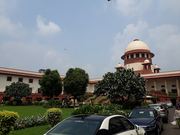
India's Parliament passed the Promotion and Regulation of Online Gaming Bill through the Lok Sabha on 20 August 2025. Presidential assent followed on 22 August 2025. The prohibition took effect on 1 May 2026. The consolidated constitutional challenge to the statute, T.C.(C) No 133/2025, Head Digital Works v Union of India, was listed before the Supreme Court on 5 August 2026, more than three months after the businesses it concerns had stopped operating. That order of events is the story.
The Act does two opposite things at once. Sections 3 and 4 promote and formally recognise e-sports and non monetary social and educational games. Section 5, read with sections 6 and 7, prohibits online real money games outright. In doing so it discards the distinction Indian courts spent seven decades constructing between games of skill and games of chance. As three researchers at the National Law School of India University wrote in an analysis published on 25 October 2025, the provisions collapse that distinction, so that skill dependent formats such as online poker and rummy variants fall inside the prohibition alongside anything else played for money.
That doctrine was not marginal. In State of Bombay v R.M.D. Chamarbaugwala (1957) the Supreme Court established that a game in which skill predominates over chance is not gambling. In State of Andhra Pradesh v K. Satyanarayana (1967) it held rummy to be a game of skill. In K.R. Lakshmanan v State of Tamil Nadu (1996) it formalised the preponderance of skill test and classified wagering on horse races as skill based. Businesses were built on those cases. Section 5 makes them irrelevant to online money play by legislative fiat.
The penalties are heavy. TechCrunch reported on 20 August 2025 that operators of online money games face up to three years in prison and fines of up to 10 million rupees, that those who promote such games, including celebrity endorsers, face up to two years and 5 million rupees, and that banks face restrictions on processing the relevant transactions. Information technology minister Ashwini Vaishnaw said priority had been given to the welfare of society and to avoiding a big evil creeping into society, citing suicides linked to gambling losses.
The 23 billion dollar figure comes from the industry, and should be read as such. The Federation of Indian Fantasy Sports, the All India Gaming Federation and the E-Gaming Federation put combined enterprise valuations at about 2 trillion rupees, projected 310 billion rupees of cumulative revenues, and warned of more than 200,000 job losses and more than 400 company closures. These are the affected companies' own numbers about themselves. The market response was immediate and partly indiscriminate: Nazara Technologies fell 12.84 per cent on the day and then clarified it had no direct exposure to real money gaming.
The rules under the Act were notified on 22 April 2026, creating an authority to oversee the sector, and the prohibition commenced nine days later. The petitioners' consolidated challenge argues that a blanket ban violates the freedom to practise any trade or business under Article 19(1)(g), the equality guarantee under Article 14, and the right to life and livelihood under Article 21, and that gambling falls to the states under Entry 34 of the State List rather than to Parliament. The matter is before Chief Justice Surya Kant with Justices Joymalya Bagchi and V.M. Pancholi. It remains pending, and the sources opened for this report do not record what happened when it was called on 5 August 2026.
One development between commencement and listing cuts against the petitioners. On 27 May 2026, in State of Tamil Nadu v Junglee Games India, 2026 INSC 594, a bench of Justices J.B. Pardiwala and R. Mahadevan held that betting on games of skill amounts to gambling and is not protected by Article 19(1)(g), set aside High Court judgments that had struck down state gaming law amendments, and held that the words betting and gambling in Entry 34 need not be read conjunctively, so that wagering money on an uncertain outcome falls within the states' legislative competence even where the game is one of skill. The Supreme Court had, in other words, already narrowed the skill defence at the level of principle three months before the challenge to the central statute was listed.
The pattern is what matters. Parliament abolished a lawful industry in a single sitting week, the executive brought the prohibition into force some eight months later, the businesses closed, and the court that will decide whether any of it was constitutional took the file after the fact. Even a judgment striking down section 5 would arrive to an industry that has already dismantled itself.
What is not known is what the bench did on 5 August 2026, whether interim relief was sought or refused at any point between assent and commencement, how many of the projected job losses and closures actually occurred, and whether the Junglee Games reasoning will be treated as governing the challenge to a central law when the underlying question there was state competence.
Sources
Every factual claim above rests on the 5 published sources below. They are listed so you can check the reporting rather than take it on trust.
- Supreme Court ObserverChallenge to the Promotion and Regulation of Online Gaming Act, 2025
- TechCrunchIndia bans real-money gaming, threatening a $23 billion industry
- Supreme Court ObserverSkill or chance: will the Supreme Court strike down the real money gaming ban?
- Supreme Court Observer Law ReportsState of Tamil Nadu v Junglee Games India, 2026 INSC 594
- Government of IndiaThe Promotion and Regulation of Online Gaming Act, 2025 (text)