Collective bargaining
US court strikes down the NLRB successor bar that compelled new owners to bargain for a year
On 21 July 2026 the D.C. Circuit held 2 to 1 in Hospital Menonita de Guayama v NLRB, No. 22-1163, that the labour board had no statutory power to create the successor bar, a rule adopted in 2011 that blocked any challenge to an incumbent union for up to 12 months after a business changed hands.
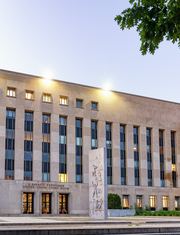
The United States Court of Appeals for the District of Columbia Circuit ruled on 21 July 2026 that the National Labor Relations Board never had the authority to create the successor bar, the rule requiring the new owner of a business to recognise and bargain with the union already in place for up to a year, whether or not that union still holds majority support. The vote was 2 to 1. The case is Hospital Menonita de Guayama, Inc. v. National Labor Relations Board, No. 22-1163, consolidated with 22-1180, argued on 4 September 2025 and decided on remand from the Supreme Court.
The doctrine has a stop and start history inside the Board itself. It was first imposed in St. Elizabeth Manor, Inc., 329 NLRB 341 (1999), repudiated in MV Transportation, 337 NLRB 770 (2002), then restored by a divided Board in UGL-UNICCO Service Co., 357 NLRB 801 (2011). In its current form it creates an irrebuttable presumption of majority support and, in the Board's own words, prevents any challenge to the union's status, whether by the employer, by employees, or by a rival union.
The facts are narrow. The petitioner became a successor employer at a hospital in Guayama, Puerto Rico in 2017. The incumbent union, Unidad Laboral de Enfermeras (os) y Empleados de la Salud, claimed to represent employees in five bargaining units. According to the opinion, it had never negotiated an agreement for two of those units, and the agreements covering the other three had expired more than four years before the change in ownership. The hospital initially recognised the union, then received evidence that a majority in each of the five units, and every employee in one unit, rejected it. It withdrew recognition and refused to bargain. An administrative law judge applied the successor bar and declined to look at that evidence at all. The Board found violations of sections 8(a)(1) and 8(a)(5) and ordered bargaining on 28 June 2022, reported at 371 NLRB No. 108, with Member Ring dissenting in part.
The route back to court matters as much as the outcome. On 27 February 2024 a D.C. Circuit panel upheld the successor bar as a reasonable Board interpretation, at 94 F.4th 1, expressly adopting the First Circuit's Chevron based reasoning in NLRB v. Lily Transportation Corp., 853 F.3d 31 (1st Cir. 2017). The Supreme Court then decided Loper Bright Enterprises v. Raimondo, 603 U.S. 369 (2024), and on 16 December 2024 granted certiorari, vacated the panel judgment and remanded for reconsideration.
Writing for the court, Circuit Judge Neomi Rao reviewed the question without deference and found the bar irreconcilable with the statute. Section 7 gives employees the right to bargain through representatives of their own choosing or to refrain, and section 9(a) requires that an exclusive representative be designated by a majority of the unit. Congress provided exactly one time bar on testing majority status, the 12 months following a valid election under 29 U.S.C. 159(c)(3). The successor bar, the court held, adds a second exception Congress did not write. It rejected the Board's analogy to the contract bar approved in Auciello Iron Works v. NLRB (1996) on the ground that the contract bar is rebuttable and the successor bar is not, and it dismissed the argument that an irrebuttable rule saves litigation cost. The bar, the opinion says, is really a rule of union stability that comes at the expense of employee freedom of association and self-organization, and the Act confers rights only on employees, not on unions. The petition for review was granted, enforcement denied, and the matter remanded.
The AFL-CIO filed as amicus supporting the Board. Senior Circuit Judge A. Raymond Randolph dissented on two grounds. He argued the remand should have gone back to the original panel under the court's own handbook, and that because the original panel had not in fact rested on Chevron, Loper Bright changed nothing. He also noted the rule has stood in its present form for about 15 years, was sustained by the First Circuit, and that congressional committees examined it and Congress declined to alter it.
Commentary since has emphasised different things. HR Dive on 28 July 2026 framed the case as post Chevron statutory analysis. Human Resources Director on 22 July 2026 led on the circuit split. Sheppard Mullin, writing on 4 August 2026, stressed that the ruling binds the D.C. Circuit, that the Board has not itself abandoned the doctrine, and that because reviewable Board orders can be appealed to the D.C. Circuit the practical reach may be wider than one circuit.
What is not known from the material available on 17 August 2026 is whether the Board will seek rehearing en banc or certiorari, whether it will acquiesce outside this circuit, and what becomes of the five Guayama units nine years after the sale. Nor did the court disturb the ordinary successorship duty to bargain, which survives untouched.
Sources
Every factual claim above rests on the 8 published sources below. They are listed so you can check the reporting rather than take it on trust.
- United States Court of Appeals for the District of Columbia CircuitHospital Menonita de Guayama, Inc. v. National Labor Relations Board, No. 22-1163, slip opinion
- United States Court of Appeals for the District of Columbia CircuitOpinions released in the previous month
- HR DiveCourt strikes down NLRB 'successor bar' rule using post-Chevron analysis
- Human Resources Director (HCA Mag US)Appeals court rejects NLRB rule locking new owners into union bargaining
- JD Supra (Sheppard, Mullin, Richter & Hampton LLP)D.C. Circuit Strikes Down NLRB's Successor Bar Doctrine: What Employers Acquiring Unionized Businesses Need to Know
- JD Supra (Dinsmore & Shohl LLP)D.C. Circuit Court of Appeals Rejects NLRB's Successor Bar Doctrine
- JD SupraFederal Appeals Court Strikes Down NLRB's Successor Bar, Changing Labor Analysis for Business Acquisitions
- JD SupraUPDATE: D.C. Circuit Strikes Down NLRB Successor Bar in Major Post-Loper Bright Ruling