Citizenship
US Supreme Court affirmed birthright citizenship on 30 June, and a new order followed on 6 August
In Trump v. Barbara, No. 25-365, decided 30 June 2026, the Supreme Court struck down Executive Order 14160 of 20 January 2025. Five weeks later, on 6 August, a second order carved out four new categories. The dissents ran to 39,891 words, about 70 per cent of the text filed.
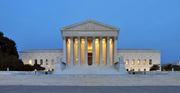
On 30 June 2026 the Supreme Court of the United States decided Trump v. Barbara, No. 25-365, and held that children born in the United States to parents who are unlawfully or temporarily present are "subject to the jurisdiction" of the United States and are therefore citizens at birth under the Citizenship Clause of the Fourteenth Amendment. Chief Justice John Roberts wrote for the Court. Announcing the decision from the bench, according to Mark Walsh's courtroom account for SCOTUSblog, Roberts said "we break no new ground today".
The case was argued on 1 April 2026 on certiorari before judgment to the United States Court of Appeals for the First Circuit, bypassing the appeal entirely. It began in the District of New Hampshire, where the court provisionally certified a nationwide class of children who would be denied citizenship by Executive Order 14160, titled Protecting the Meaning and Value of American Citizenship, signed on 20 January 2025 and published at 90 Fed. Reg. 8449. The district court preliminarily enjoined the order, at 790 F. Supp. 3d 80 (D.N.H. 2025). The Supreme Court affirmed.
The line up recorded in the slip opinion is narrower than the headlines suggest. Roberts was joined by Justices Sotomayor, Kagan, Barrett and Jackson. Jackson filed a concurrence, which Sotomayor joined as to the introduction and Part I. Kavanaugh filed an opinion concurring in the judgment and dissenting in part. Thomas dissented, joined by Gorsuch, and Alito and Gorsuch each filed separate dissents. Most coverage called the result 6 to 3. Wikipedia's account of the case records it as 6 to 3 on the judgment but 5 to 4 on the constitutional holding, because Kavanaugh reached the same outcome on narrower ground and did not accept the majority's broader rule. Both descriptions can be defended from the opinion, and the sources do not agree on which to lead with.
The disagreement was lopsided in volume. Adam Feldman, writing for SCOTUSblog on the day of the decision, counted 7,801 words in the Roberts majority against 27,477 in the Thomas dissent, 11,594 in Alito's and 820 in Gorsuch's, so the dissenting text made up roughly 70 per cent of everything filed. United States v. Wong Kim Ark, decided in 1898, was cited 16 times by the majority and 49 times by Thomas.
The majority's reasoning is historical rather than consequentialist. It runs from Calvin's Case and Blackstone through Chancellor Kent and Lynch v. Clarke, then to the repudiation of Dred Scott v. Sandford, Attorney General Edward Bates's 1862 opinion, the Civil Rights Act of 1866 and Wong Kim Ark. "A child born on American soil and subject to American law was made an American citizen," the syllabus records. Alito's dissent takes the opposite view, that the Amendment confers citizenship only on children who at birth owe allegiance solely to this country.
Five weeks later the executive branch returned. On 6 August 2026 the President signed Executive Order 14418, Continuing to Protect the Meaning and Value of American Citizenship, which expressly cites Trump v. Barbara. Where neither parent is a citizen, it directs that citizenship not be recognised if either parent is an "alien enemy", including members of designated foreign terrorist organisations, or is a foreign government or international organisation employee with immunity, or "engaged in a commercial transaction to purchase or access birthright citizenship", or where the birth occurs in a United States territory or waters in which no federal statute confers citizenship. Departments have 30 days to issue implementing guidance. A second order, Ending Birth Tourism, was signed the same day.
On 11 August 2026 the American Civil Liberties Union and other groups filed in the District of New Hampshire before Judge Joseph Laplante, the judge who issued the class wide preliminary injunction on 10 July 2025, arguing that the new order cannot survive the judgment the Supreme Court has just affirmed.
The same week produced a colder reminder that jus soli is not the world's rule. Free Movement reported on 12 August 2026 that the High Court in England had refused judicial review to two stateless siblings, aged 12 and 11, born in Kenya to parents who held British Overseas Citizen status, who sought registration as British citizens under section 3(1) of the British Nationality Act 1981. The judge found that the problem was "the lack of evidence provided in the applications; not in the assessment of that evidence".
What is not known is large. Neither the syllabus of the June opinion nor the text of the August order says what nationality a child excluded from United States citizenship would hold instead, and the order does not use the word statelessness. No figure has been published for how many births fall inside the four new categories. It is not yet decided whether Judge Laplante will treat the August order as covered by the class judgment, nor whether the administration will press a rehearing petition.
Sources
Every factual claim above rests on the 11 published sources below. They are listed so you can check the reporting rather than take it on trust.
- CourtListenerTrump v. Barbara, No. 25-365 (slip opinion, syllabus and opinion of the Court)
- The White HouseExecutive Order: Continuing to Protect the Meaning and Value of American Citizenship
- The White HousePresidential Actions index
- SCOTUSblogSupreme Court strikes down Trump's order ending birthright citizenship
- SCOTUSblogBreaking down the birthright-citizenship decision
- SCOTUSblogBirthright citizenship: 'We break no new ground today'
- SCOTUSblogTrump signs new birthright citizenship order, ballroom dispute likely headed to Supreme Court
- SCOTUSblogChallenge brought to Trump's new birthright citizenship order
- WikipediaTrump v. Barbara
- WikipediaExecutive Order 14160
- Free MovementChallenge to citizenship refusal under section 3(1) by stateless children refused for lack of supporting evidence