Conscience and the law
US Supreme Court leaves standing the rule that state law can defeat a religious exemption at work
On 29 June 2026 the Supreme Court refused to hear Doe v. Hochul, docket 24-1015, over the dissent of three justices, leaving intact a Second Circuit rule that breaching a state vaccine regulation is automatically an undue hardship under Title VII. A second ruling followed on 15 July.
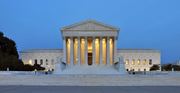
The United States Supreme Court declined on 29 June 2026 to hear the case of New York healthcare workers who were sacked after their employers refused them religious exemptions from a state COVID-19 vaccination rule. The denial of certiorari in Doe v. Hochul, docket 24-1015, leaves standing a rule of the Second Circuit Court of Appeals that an employer suffers an "undue hardship" under federal anti discrimination law whenever accommodating a worker's religion would put the employer in breach of a state regulation. Three of the nine justices recorded a dissent.
The facts are set out in the dissenting opinion filed with the order. New York's Department of Health issued an emergency vaccination requirement for licensed healthcare workers in 2021. It carried a medical exemption and, initially, a religious one. The religious exemption was removed. One petitioner, identified in the papers only as John Doe 2, was a Christian Scientist employed by New York-Presbyterian Healthcare System who had held a religious exemption from that employer's own vaccination policy for years. He offered to submit to "weekly testing and 100% Mask compliance" instead. His employer rejected the offer and dismissed him. Other petitioners worked for Trinity Health and for Westchester Medical Center Advanced Physician Services.
Writing for himself and two colleagues, Justice Neil Gorsuch opened by observing that the Court "once again" faced workers who "served on the front line of a pandemic" and were then "fired . . . for adhering to their . . . religious beliefs". He said he harboured "serious doubts about the Second Circuit's rule". Title VII of the Civil Rights Act does allow an employer to escape liability where accommodation would impose an undue hardship, but the Court held in Groff v. DeJoy in 2023 that a hardship qualifies as undue only when it is "substantial in the overall context of" the employer's business. Justice Gorsuch's objection is that a state regulation, including one that may itself be unconstitutional as applied, should not be able to supply that defence automatically and so cancel a federal civil rights protection.
The appeals court saw it differently, and its view is now the operating law in New York, Connecticut and Vermont. It accepted that the hospitals could not have granted the exemptions without breaching the state rule and exposing themselves to financial penalties or the loss of an operating licence. On that reasoning the hardship was not a matter of degree at all. New York officials have maintained that the rule permitted some religious accommodations but not blanket exemptions. The mandate itself was repealed in October 2023, after the federal public health emergency ended, which is part of why the question keeps returning to the Court in cases about people who were already out of work.
Two weeks after the denial, the same appeals court narrowed the path for religious objectors again. In Bergin v. New York State Unified Court System, No. 25-721, decided on 15 July 2026, a panel of Judges Raggi and Nathan sitting with District Judge Furman vacated a judgment that had gone to a court officer who was dismissed after declining vaccination and largely refusing to answer her employer's supplementary questionnaire about her beliefs. The court replaced the long standing test with a new one. A claimant must now show that she "actually required an accommodation of her religious practice", and that "the employer's desire to avoid the actually required prospective accommodation was a motivating factor in" an adverse decision. Employer knowledge, the panel said, "may be evidence of motive, but the absence of such evidence is not dispositive".
Practitioners disagree about how large that shift is. Employment lawyers writing on 16 and 21 July 2026 described it as a rewriting of the framework that moves the burden from what an employer knew to what an employer intended, and as a material rise in the evidence an ordinary employee must assemble. The panel itself presented the change as no more than an application of the Supreme Court's 2015 decision in EEOC v. Abercrombie & Fitch Stores. Both readings cannot be right, and lower courts will settle it case by case.
What is unresolved is whether the Supreme Court has finished with the question. The petitioners filed a petition for rehearing on 23 July 2026, arguing that the Second Circuit continues to apply the rule the dissenters criticised. No court has yet ruled on whether removing the religious exemption while keeping the medical one was itself unconstitutional, and the denial of certiorari decides nothing about that. Nor is it known how many dismissed workers across the state are affected, or whether any other circuit will adopt the New York approach.
Sources
Every factual claim above rests on the 9 published sources below. They are listed so you can check the reporting rather than take it on trust.
- Legal Information Institute, Cornell Law SchoolDoe v. Hochul, No. 24-1015, opinion of Gorsuch, J., dissenting from the denial of certiorari
- SCOTUSblogDoes 1-2 v. Hochul (24-1015) case file and docket
- CBS NewsSupreme Court rejects legal battle over New York's COVID-19 vaccine mandate for health care workers
- Religion ClauseCert. Denied Over Dissent of 3 Justices in Covid Vaccine Religious Accommodation Case
- FindLaw CaselawBergin v. New York State Unified Court System, No. 25-721 (2d Cir.)
- Employment Law LetterSecond Circuit rewrites the playbook on religious accommodation claims
- Long Island and New York Employment Law blogTitle VII religious accommodation: the Second Circuit's Bergin decision
- Littler Mendelson P.C.Littler Lightbulb: July 2026 Employment Appellate Roundup
- Employee Rights CounselSupreme Court declines to revisit religious accommodation rules for employers