Migration
Ceuta arrival counts range from 40,000 to 75,000 and reported deaths from 67 to more than 80
Spain, Morocco and the EU never agreed how many people crossed into Ceuta on 30 and 31 July 2026, how many returned, or how many died. The one document all sides point at, a Spanish Supreme Court ruling of 8 July, says nothing about letting anyone stay.
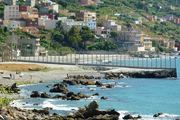
On 30 and 31 July 2026, tens of thousands of people crossed from Morocco into the Spanish enclave of Ceuta. More than a fortnight later, no two official accounts agree on how many arrived, how many went back, or how many died.
Al Jazeera reported on 1 August that Spain's Interior Ministry put the number who had crossed since Thursday morning at about 50,000, while Juan Jesus Vivas, head of Ceuta's local government, said as many as 60,000 had pushed across over the previous couple of days. The same report gave an Interior Ministry estimate of 48,300 returned by 6pm on the Friday, and a death toll raised to at least 67 on the Saturday. Spain's Ministry of Foreign Affairs, in an explainer published on its own website, put it at "nearly 50,000 people who crossed into Ceuta illegally on 30 July" and said the majority had already been returned within 48 hours. Euronews reported on 2 August that the Interior Ministry's own range was 60,000 to 75,000, with about 53,000 returned. The National reported on 4 August that 69,500 had returned to Morocco, that between 3,000 and 5,000 remained in Ceuta, and that 75 people had died. The Carnegie Endowment for International Peace published a commentary on 6 August in which Sarah Yerkes wrote of 60,000 Moroccan citizens leaving the country and said more than eighty did not survive, a number she expected to grow. Morocco's own count, reported by Infobae on 3 August, was about 40,000.
The gap between the lowest and the highest arrival figure is more than 35,000 people. The death toll has moved in one direction only. Morocco has acknowledged at least 11 deaths on its own coast during the 30 July crossing. Neither government has published a consolidated, reconciled count.
What is documented precisely is the ruling both governments now point at. On 8 July 2026 the Fifth Section of the Administrative Chamber of Spain's Supreme Court held that the summary return power in Additional Provision Ten of the immigration law does not reach people who swim towards Ceuta or Melilla. The court found that "no cabe equiparar tales elementos de contencion con los dispositivos tecnologicos de control fronterizo", that physical containment structures such as fences cannot be equated with technological surveillance systems. People intercepted at sea must instead be processed under article 58.3 of Organic Law 4/2000, with access to a lawyer and an assessment for international protection. The case concerned an Algerian man intercepted on 14 November 2024 while swimming towards Ceuta with two others. The government's appeal was dismissed.
Morocco's Interior Ministry attributed the surge, according to Infobae, to "a combination of the action of human trafficking networks, disinformation and misunderstandings surrounding a Spanish Supreme Court ruling on hot returns". Rabat rejected accusations that it had thinned its border presence under pressure or blackmail and described itself as a reliable ally of Spain.
Madrid's counter is on the record and is a claim the Spanish state makes about itself. Its foreign ministry states flatly that "the ruling does not amend Spain's immigration law and does not allow anyone to stay", and that irregular entry into Ceuta "confers no right to remain in Spain, no right to travel to the mainland and no right to move within Europe". Prime Minister Pedro Sanchez described the crossing, in remarks reported by Al Jazeera, as "a violation of Spain's territorial sovereignty". Foreign Minister Jose Manuel Albares said that "virtually all those who entered have now returned to Morocco".
Euronews reported on 2 August, following the Spanish outlet The Objective, that intelligence services had warned in the preceding days that Morocco's King Mohammed VI might make a gesture of magnanimity at the border around Throne Day, and that roughly 1,000 people had swum into Ceuta over about ten days beforehand, which intelligence officials read as a test. The Interior Ministry maintained that cooperation with Morocco had been "exemplary, loyal and permanent".
The European reaction was fast and partly misdescribed. Italian Prime Minister Giorgia Meloni said on 31 July that she was ready to act "including through exceptional measures, such as suspending the Schengen agreement with Spain". Foreign Minister Antonio Tajani called for closing the Schengen area with Spain, Denmark's Mette Frederiksen said the EU should consider "a suspension of Schengen cooperation", and Finland's Interior Minister Mari Rantanen said countries that do not protect the external border "cannot be members of Schengen". The Spanish fact checking outlet Maldita established that no suspension occurred and that none is legally possible: Italy reintroduced temporary internal border controls on travellers from Spain for one month from 1 August, a mechanism the Schengen Borders Code already provides for, and Spain reciprocated on Saturday 8 August with controls on arrivals from Italy running to 7 September. Reintroducing checks is not closing a border, and the Schengen rules contain no mechanism for expelling a member state. EU Migration Commissioner Magnus Brunner told reporters that Europe "has definitely passed this test" because "people did not manage to enter the Schengen area". Spain's foreign ministry explains why: Ceuta and Melilla sit inside Schengen but under a regime it calls unique in Europe, with Schengen checks carried out on exit by sea or air, so that "no one can travel from Ceuta or Melilla to mainland Spain without being identified by the National Police at the port or the airport".
Several things remain unknown. Neither Madrid nor Rabat has explained why their arrival counts differ by tens of thousands, and neither has published a final death toll or a methodology for arriving at one. Whether Moroccan border forces stood back deliberately is asserted by Spanish commentators and denied by Morocco, and Yerkes writes that she is highly sceptical Morocco would have allowed, let alone encouraged, such a departure. Whether the 8 July ruling caused the surge, or was seized on afterwards by everyone with a reason to explain it, is a question the documents cannot settle.
Sources
Every factual claim above rests on the 9 published sources below. They are listed so you can check the reporting rather than take it on trust.
- Consejo General del Poder Judicial (Spain)The Supreme Court confirms that the law does not permit hot returns of migrants attempting to enter Ceuta and Melilla by swimming
- Ministry of Foreign Affairs, European Union and Cooperation (Spain)Ceuta and Melilla: the Schengen regime and irregular entry
- Al JazeeraSpain says migrants leaving Ceuta after mass influx in which 67 died
- EuronewsSpanish government received intelligence warnings of Ceuta migrant surge days before crisis
- Carnegie Endowment for International PeaceCeuta, Morocco and Europe: the migration fallout
- InfobaeMorocco acknowledges 40,000 migrant entries into Spanish territory and blames mafias, disinformation and misunderstandings of the Supreme Court ruling
- The NationalSpain says it is in control after fall out with EU states over Ceuta migrant crisis
- The LocalItaly says Spain should be suspended from Schengen zone
- Maldita.esNo, Italy has not closed the Schengen area with Spain: it has temporarily reintroduced border controls
More in World News
A Stockholm court put Google's Shopping bill at 14.3 billion kronor and found the abuse ran past 2017

Sixty six jurisdictions cleared the Paramount takeover of Warner Bros. Discovery. A US court has it frozen
The General Assembly backed the World Court's climate opinion 141 to 8, but the reparation test is narrow