Climate and energy
Romania lost all its nuclear power on 13 August after the Danube fell three centimetres too low
Cernavoda Unit 1 shut on 28 July and Unit 2 on 13 August, taking about a fifth of Romania's generation offline. Explosives, dredging and rock laden barges bought nine days by lifting the river four centimetres. It still fell to 182cm against a 185cm minimum.
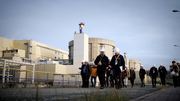
Romania has had no nuclear generation at all since the morning of 13 August 2026, when the second and last reactor at the Cernavoda plant was disconnected because the Danube no longer carried enough water to cool it. World Nuclear News reported that the controlled shutdown of Unit 2 began at 7am and was complete by 10.53am, after the river level at the plant fell to 182 centimetres on 12 August against the 185 centimetres the station requires.
The first reactor had already gone. On 27 July, after an emergency energy command meeting convened by prime minister Ilie Bolojan, who was also acting as interim energy minister, the state operator Nuclearelectrica announced that Unit 1 would be shut down in a controlled manner and disconnected from the national grid on the morning of 28 July. HotNews reported the Danube discharge forecast falling to about 1,630 cubic metres per second, against a July historical average of about 4,700 and an August average of about 4,300, and described that as the lowest in roughly three decades, with the previous record of 1,400 cubic metres per second set in 1985.
The reason for shutting a reactor pre-emptively rather than riding out the drought was mechanical rather than nuclear. Romania's energy ministry said a failure in one of the cooling pumps would mean complex repair work lasting several months and possibly reaching a year. Nuclearelectrica chief executive Cosmin Ghita said that keeping both units in a safe shutdown state "has no impact on nuclear safety parameters, and therefore on personnel, the environment, or the population".
What happened in between was an attempt to move the river. World Nuclear News reported that an energy ministry intervention on 9 August, using explosives, dredging and barges filled with rock, raised the water level at the plant by four centimetres and was expected to allow operation for at least the following nine days. Wikipedia's article on the plant, citing Romanian outlets including Libertatea, states that the Romanian Naval Forces carried out a controlled detonation of the Parjoaia rock formation on the Old Danube arm, and that four barges loaded with the resulting rock were sunk on the Bala branch to push water towards the station. That fuller account of who did the blasting rests on the Wikipedia entry and its citations rather than on any document opened for this article. What World Nuclear News corroborates is the method, the date and the result: four centimetres, then failure.
The size of the hole in Romanian supply is reported inconsistently. World Nuclear News describes the two units as 650 MWe CANDU reactors accounting for roughly one fifth of Romania's electricity. HotNews put the combined loss at 1,400 MW and at 20 per cent of national production. Both land on the same share of the system, which is the number that matters for consumers, but the per unit rating differs between the two accounts.
Romania is covering the gap with wind estimated to average about 525 MW over seven days, on a range of 100 MW to 1,560 MW, the 330 MW Rovinari group 4 coal unit available from reserve, a Hidroelectrica minimum of about 300 MW, and roughly 4,000 MW of cross border import capacity, according to HotNews. The same report recorded consumption of 6,662 MW against production of 5,908 MW at 7.15pm on the Wednesday. Cernavoda director Romeo Urjan said a 10 day forecast showed the Danube continuing to fall, so "for at least 10 days we don't see a nuclear unit restart". Energy ministry secretary of state Cristian Busoi warned that a prolonged closure could show up in autumn bills.
Hungary is fighting the same river with heavier engineering. World Nuclear News reported that units 1, 3 and 4 of the Paks plant, which generates about half of Hungary's electricity, also had to be shut down because of the low Danube, while unit 2 kept running at reduced power, at half capacity for 11 days, before being returned to full nominal power on 10 August. On 12 August Hungary announced two countermeasures: two 80 metre barges on standby at Paks as a temporary measure, which the operator said could raise the local level by up to 20 centimetres, and a weir near the village of Dunaszentbenedek built with 35,000 and then 110,000 cubic metres of stone, intended to stop the level at the plant's cooling channel falling below minus 90 centimetres. The cost is put at about 6 billion forint, roughly 10 million US dollars. General Pal Kadar is coordinating the work with about 100 national guardsmen. Officials said the measures would not compromise nuclear safety.
The Danube crisis is wider than either plant. Wikipedia's article on the 2026 European heatwaves records the Elbe, Rhine and Danube in severe drought with record shallowness in the Balkans on 10 August, and about 30 per cent of Austrian Danube cruises cancelled.
What is not known is when either Romanian reactor restarts, since that depends on rainfall upstream rather than on any decision available to Bucharest. No public gauge series for the plant intake has been published alongside the shutdown announcements, so the 182 and 185 centimetre figures rest on the operator and the ministry. Nor has any Romanian authority said whether the blasting and the sunken barges will be reversed, left in place, or repeated if the river falls again.
Sources
Every factual claim above rests on the 6 published sources below. They are listed so you can check the reporting rather than take it on trust.
- HotNews.roReactor 1 at Cernavoda to be shut down because of the extremely low flow of the Danube
- World Nuclear NewsRomanian plant taken offline as Hungary moves to keep Paks operating
- HotNews.roRomania is left without nuclear energy today: the Cernavoda plant shuts down completely
- WikipediaCernavoda Nuclear Power Plant
- WikipediaPortal: Current events, 13 August 2026
- Wikipedia2026 European heatwaves
More in World News
A Stockholm court put Google's Shopping bill at 14.3 billion kronor and found the abuse ran past 2017

Sixty six jurisdictions cleared the Paramount takeover of Warner Bros. Discovery. A US court has it frozen

The General Assembly backed the World Court's climate opinion 141 to 8, but the reparation test is narrow