Campaign finance
Party committees can now spend without limit alongside their own candidates after a 2001 precedent fell
On 30 June 2026 the Supreme Court held 6 to 3 in National Republican Senatorial Committee v. FEC that the coordinated party expenditure limits at 52 U.S.C. section 30116(d) violate the First Amendment, overruling Colorado II. The caps ran from 65,300 US dollars to 32,392,200 US dollars.
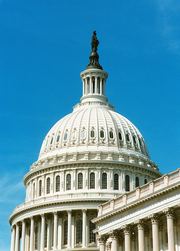

The Supreme Court decided National Republican Senatorial Committee v. Federal Election Commission, No. 24-621, on 30 June 2026, and struck down the last significant restriction on what a political party may spend in concert with its own candidate. The vote was 6 to 3. Justice Brett Kavanaugh wrote the majority opinion, joined by Chief Justice John Roberts and Justices Clarence Thomas, Samuel Alito, Neil Gorsuch and Amy Coney Barrett. Justice Elena Kagan dissented, joined by Justices Sonia Sotomayor and Ketanji Brown Jackson.
The provision struck down is 52 U.S.C. section 30116(d) of the Federal Election Campaign Act. The precedent overruled is Federal Election Commission v. Colorado Republican Federal Campaign Committee, 533 U.S. 431, decided in 2001 and known as Colorado II, which had upheld the same limits by 5 to 4.
The numbers give the scale. According to the syllabus, national party committees could spend between 130,600 and 4,071,800 US dollars in coordination with an individual Senate candidate depending on the state, between 65,300 and 130,600 US dollars with a House candidate, and 32,392,200 US dollars with a presidential candidate. Those ceilings no longer exist.
The unusual feature of this case is that the regulator has published its own account of what it can no longer enforce. The Federal Election Commission's update states plainly that the Court found the limits disproportionate and neither necessary nor narrowly tailored, and that the decision removes the monetary caps on what party committees may spend in coordination with their candidates' general election campaigns. The commission also posted a separate notice recording that the opinion had issued in Case No. 24-621.
Kavanaugh's reasoning is that the only interest that can justify a limit on political spending is preventing quid pro quo corruption or its appearance, and that the existing architecture already does that work: base contribution limits, the rules against earmarking, and disclosure requirements. Undue influence, in the majority's account, is not a permissible basis for regulating campaign finance. He also pointed to the states, most of which have no coordinated expenditure limit and where, he said, no evidence of resulting corruption has emerged.
Kagan's dissent, as reported by Amy Howe for SCOTUSblog on the day of the decision, is that the ruling reopens the same route to quid pro quo corruption the limits were built to close, because a donor who may give a candidate about 7,000 US dollars directly may now give a party committee something closer to half a million dollars knowing it can be spent in coordination with that candidate.
The litigation was brought by the National Republican Senatorial Committee and the National Republican Congressional Committee together with two individual candidates, then Senator JD Vance and then Representative Steve Chabot. The question was certified out of the Southern District of Ohio in 2024, and the Sixth Circuit upheld the limits, Chief Judge Jeffrey Sutton writing that the Supreme Court had not overruled its own precedent. Certiorari was granted on 30 June 2025, exactly a year before the decision.
The procedural posture was strange in a way that shaped the argument. The Justice Department declined to defend the statute, telling the Court that this was the rare case warranting an exception to its practice of defending acts of Congress, so the Court appointed Roman Martinez to argue in support of the judgment below. Democratic party committees intervened to defend the limits. At argument on 9 December 2025, Noel Francisco for the challengers said the limits were at war with the Court's recent First Amendment cases. Marc Elias, for the Democratic committees, questioned whether disclosure does the work the challengers claimed, saying he spends a great deal of time in the commission's disclosure database without finding corruption in it. Martinez pressed the Court to dismiss without reaching the constitutional question, arguing that Vance lacked standing because he had disclaimed concrete plans to run in 2028; both Roberts and Alito expressed doubt about that. Justice Barrett asked a single question. Justice Gorsuch asked none. Amy Howe's read of the argument that day was that the Court was difficult to read, and that some justices worried a ruling would set off further challenges to other campaign finance rules in the way McCutcheon did after 2014.
The direction of the money is the part that cuts against a decade of commentary. Most post 2010 analysis assumed that campaign finance rulings push spending outwards, to super political action committees and other groups the candidate cannot legally direct. This ruling pushes it back the other way, towards the formal party committees, which are disclosed and which the candidate can coordinate with directly.
What is not yet known is how much of the outside money actually moves. The first federal election run under the new rule is the November 2026 midterm, and the disclosure filings that would show it have not been made.
Sources
Every factual claim above rests on the 8 published sources below. They are listed so you can check the reporting rather than take it on trust.
- Federal Election CommissionSupreme Court finds limits on coordinated party expenditures unconstitutional in NRSC v. FEC
- Federal Election CommissionSupreme Court issues opinion in National Republican Senatorial Committee, et al. v. FEC, et al.
- SCOTUSblogJustices strike down campaign finance law
- Cornell Legal Information InstituteNational Republican Senatorial Committee v. Federal Election Commission, No. 24-621
- SCOTUSblogCourt to hear arguments on whether to further cut back campaign finance limitations
- SCOTUSblogSupreme Court difficult to read in case on campaign finance limitations
- SCOTUSblogNational Republican Senatorial Committee v. Federal Election Commission case file
- WikipediaNational Republican Senatorial Committee v. FEC
More in Democracy
The Supreme Court left Section 2 standing in Callais and changed what plaintiffs have to prove

Mississippi can still count mail ballots that arrive five days late, with Barrett writing and Alito dissenting
The Supreme Court buried Humphrey's Executor on 29 June 2026 and exempted the Federal Reserve the same day