Courts and the vote
The Supreme Court left Section 2 standing in Callais and changed what plaintiffs have to prove
Louisiana v. Callais, decided 6 to 3 on 29 April 2026, struck down the SB8 map as an unconstitutional racial gerrymander. Justice Alito's majority declined to hold Section 2 of the Voting Rights Act unconstitutional, and instead added three evidentiary requirements to the 1986 Gingles framework.
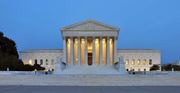
The most repeated line about Louisiana v. Callais is that the Supreme Court killed the Voting Rights Act. The opinion does something narrower and, for anyone who has to litigate a redistricting case, more consequential. It left Section 2 on the statute book and changed what a plaintiff has to prove to win under it.
The consolidated cases, Nos. 24-109 and 24-110, were argued on 24 March 2025, restored to the calendar for reargument on 27 June 2025, reargued on 15 October 2025, and decided on 29 April 2026 by 6 to 3. Justice Samuel Alito wrote for the majority, joined by Chief Justice John Roberts and Justices Clarence Thomas, Neil Gorsuch, Brett Kavanaugh and Amy Coney Barrett. Justice Thomas, joined by Justice Gorsuch, filed a concurrence arguing that Section 2 should not apply to districting at all, a position no other justice adopted. Justice Elena Kagan dissented, joined by Justices Sonia Sotomayor and Ketanji Brown Jackson.
The holding is that Louisiana's SB8 map, which created a second majority Black congressional district after federal courts found the state's earlier map likely violated Section 2, was itself an unconstitutional racial gerrymander under the Fourteenth Amendment. Compliance with the Voting Rights Act, the majority held, did not require Louisiana to use race as the basis for drawing the district.
The machinery is in what the majority did to Thornburg v. Gingles, the 1986 decision that set the three preconditions for a vote dilution claim. The Brennan Center's case page, updated on the day of the decision, identifies three new requirements. First, illustrative maps offered by plaintiffs must meet all of the state's legitimate districting objectives, including its stated political goals, which can extend to protecting particular incumbents at particular margins. Second, plaintiffs proving politically cohesive minority voting and majority bloc voting must produce an analysis that controls for party affiliation. Third, the totality of circumstances inquiry now demands strong evidence of present day intentional racial discrimination, with historical discrimination and its social effects given substantially less weight.
Writing in SCOTUSblog on 26 May 2026, Issa Kohler-Hausmann of Yale and Kevin Z. Yang of the Legal Aid Society quoted the majority directly on the second of these: to satisfy the second and third Gingles preconditions, plaintiffs must provide an analysis that controls for party affiliation. Their reading is that the Court presented this as an update to evidentiary standards while in substance rewriting the protection. That framing dispute is the real argument about Callais, and the sources do not resolve it.
Justice Kagan's dissent says the majority has returned Section 2 to requiring proof of intentional discrimination, undoing the effects test Congress wrote into the statute in 1982. The Equal Justice Initiative, reporting on 30 April 2026, quoted her warning that the decision threatens a half century's worth of gains in voting equality and renders Section 2 all but a dead letter. Amy Howe, reporting for SCOTUSblog on the day of the decision, put the same point more precisely: the opinion stopped short of striking down Section 2, though Kagan warned it had been rendered nearly powerless. Those are different claims. Only one of them is a statement about the text of the opinion.
The practical consequences arrived within days. On 30 April 2026 the winning voters asked the Court to bypass the standard 32 day waiting period before its judgment became final, so Louisiana could redraw its map in time; Black voters defending the SB8 map asked for the judgment to be held until after the 2026 election. Louisiana's own lawyers declined to endorse the expedited timeline. Governor Jeff Landry signed an executive order urging the legislature to adopt a new map. Louisiana's congressional primaries were suspended. Overseas ballots had already gone out.
The reach of the new standard became clearer on 18 May 2026, when the Court sent two further Section 2 cases back to the lower courts for reconsideration in light of Callais: a Mississippi legislative map case brought by the state NAACP and fourteen voters, and a North Dakota case brought by the Turtle Mountain Band of Chippewa Indians, the Spirit Lake Tribe and three Native American voters. CBS News reported that private plaintiffs have brought more than 400 Section 2 cases since 1982, against roughly 40 by the Justice Department, and that a separate question in those cases is whether private plaintiffs can sue under Section 2 at all. Justice Jackson dissented from those orders.
What is not yet known is how many Section 2 claims survive the new requirements. No court has yet applied all three of them to a fully litigated map.
Sources
Every factual claim above rests on the 8 published sources below. They are listed so you can check the reporting rather than take it on trust.
- SCOTUSblogIn major Voting Rights Act case, Supreme Court strikes down redistricting map challenged as racially discriminatory
- SCOTUSblogHow Callais broke the Voting Rights Act and weaponized the equal protection clause: part 1
- SCOTUSblogAfter major voting rights ruling, parties dispute whether the Court should finalize decision immediately
- Brennan Center for JusticeLouisiana v. Callais
- Equal Justice InitiativeSupreme Court Undermines Black Political Participation in Ruling on Voting Rights Act
- CBS NewsSupreme Court tells lower courts to take new look at 2 major voting rights cases
- Cornell Legal Information InstituteLouisiana v. Callais, Nos. 24-109 and 24-110, order restoring cases to the calendar for reargument
- WikipediaLouisiana v. Callais
More in Democracy

Mississippi can still count mail ballots that arrive five days late, with Barrett writing and Alito dissenting
Party committees can now spend without limit alongside their own candidates after a 2001 precedent fell
The Supreme Court buried Humphrey's Executor on 29 June 2026 and exempted the Federal Reserve the same day