Asia-Pacific
South Korea's president has offered to negotiate an end to the Korean War, and Pyongyang has said nothing back
In his Liberation Day address on 15 August 2026, President Lee Jae Myung proposed talks to end the war the 1953 armistice only paused and to discuss halting the North's nuclear advance. By 16 August Pyongyang's state media had covered only its own celebrations.
President Lee Jae Myung used his Liberation Day address on 15 August 2026, marking the 81st anniversary of Korea's liberation from Japanese colonial rule, to propose direct talks with North Korea aimed at formally ending the Korean War. The Korea Times, carrying a Yonhap report filed at 11.07am Korean time, quoted him telling the ceremony: let us put down our intentions to threaten each other and begin discussions to end the long running war as the directly involved parties. He said that in the process the two sides may also discuss effective ways to halt the advancement of the North's nuclear capabilities.
The legal position he is proposing to change is precise. The fighting of 1950 to 1953 stopped under an armistice, not a peace treaty, so the two Koreas remain technically at war. Speaking at the Sejong Center in Seoul, Lee said his government would embark on a journey to end war and transform the Korean Peninsula's unstable armistice into a peace regime, and called for the parties to drop all intentions of threatening one another and initiate dialogue among directly concerned parties. He said he hoped the South and the North could sit down together to pursue peaceful coexistence and shared growth.
The address was not only about the North. Lee said Korea and Japan had strengthened cooperation over the past year across supply chains, energy and advanced industries, and that building trust required mutual empathy and a sincere recognition of one another's pain. He said his government would use the Special Act on Asset Confiscation for Pro-Japanese and Anti-National Collaborators, passed on 2 June, to investigate and recover assets illicitly accumulated by collaborators and hold them accountable before history, with the proceeds going to independence activists and their families. The United States Secretary of State, Marco Rubio, issued a congratulatory message the same day saying the United States remains proud to stand with the Republic of Korea, an indispensable partner, and referring to President Donald Trump's state visit in late October 2025.
What has not happened is a reply. The Korea Herald reported on 16 August that North Korea remained silent, and that neither the Korean Central News Agency nor Rodong Sinmun had carried any report on Lee's address as of Sunday morning. Their coverage of the anniversary was domestic: people visiting the statues of Kim Il-sung and Kim Jong-il to pledge loyalty. NK News reported that Pyongyang marked the day with a mass dance by students in Kim Il Sung Square and fireworks, that Rodong Sinmun covered the celebrations the following day, that Kim Jong Un and Vladimir Putin traded messages, and that a Russian sailboat docked in Wonsan with flowers for the Kim family. North Korean state output aggregated by KCNA Watch around the anniversary ran to a fish pickling factory, a hot spring resort and machine building for coal mines, with no reference to the South Korean president.
This is not the first silence. The Korea Herald noted that Lee's dialogue overture came despite the North remaining unresponsive to Seoul's repeated reconciliatory gestures since he took office in June 2025.
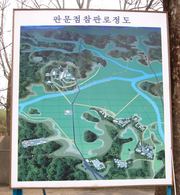
Military friction along the border continues. On 16 August The Korea Herald reported that South Korean troops had fired warning shots after multiple North Korean soldiers crossed the military demarcation line in the eastern front line area at some point in the preceding week. A government source said the soldiers were likely to have been patrolling when they crossed, that they returned to their side after the warning shots, and that no other unusual activity was reported. It was the South's first such warning shots of 2026. The Korea Herald noted that brief crossings have often been reported in recent years as the North fortifies its side of the border, since Kim Jong Un declared in late 2023 that inter-Korean ties were between two hostile states.
There is also friction inside the South about the policy itself. On 6 August the unification ministry publicly defended its North Korea approach after Lee called for caution, saying nothing would happen if it stayed put and that it would make ceaseless efforts to create even the smallest opportunity to bring peace in challenging conditions.
So the position is documented and the response is measurable. Lee has made an offer in a set piece national address, on the record, with specific content: an end of war negotiation, a peace regime to replace the armistice, and talks on the North's nuclear programme. What is not known is whether Pyongyang's silence is a rejection, a delay, or simply the same non-answer it has given every other approach since June 2025. Nothing in the North's Liberation Day output addressed the offer, and Seoul has not said what it will do if no reply comes, or whether it has proposed a channel, a venue or a date.
Sources
Every factual claim above rests on the 8 published sources below. They are listed so you can check the reporting rather than take it on trust.
- The Korea TimesLee proposes talks with NK to formally end Korean War, halt Pyongyang's nuclear program
- The Korea HeraldLee underscores peace with N. Korea, trust with Japan
- The Korea HeraldN. Korea silent on Lee's proposal for dialogue to officially end Korean War
- The Korea HeraldS. Korean military fires warning shots after N. Korean troops briefly cross MDL
- The Korea HeraldRubio calls S. Korea an indispensable partner in Liberation Day message
- The Korea HeraldUnification ministry defends N. Korea policy after Lee's call for caution
- NK NewsOn Liberation Day, North Korea blasts fireworks as South Korea calls to end war
- KCNA WatchNorth Korean state media newstream