Technology
Most Australian under-16s are still using social media, the regulator's own evaluation finds
eSafety's three month follow-up, published on 31 July 2026, found 81.5 per cent of children aged 10 to 15 were still using an age-restricted platform, down from 85.9 per cent before the ban began. Parliament is now weighing a bill to double the maximum fine to A$99 million.
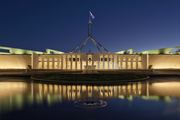
More than 80 per cent of Australian children aged 10 to 15 were still using an age-restricted social media platform three months after the country's under-16 rules took effect, according to the regulator's own evaluation.
eSafety released the three month follow-up to its evaluation of the scheme on 31 July 2026. Writing in The Conversation the same day, Lisa M. Given, professor of information sciences at RMIT University, set out the findings: the proportion of under-16s using at least one age-restricted platform fell from 85.9 per cent before the law commenced to 81.5 per cent, and the proportion holding an account fell from 52.4 per cent to 42.1 per cent. The evaluation surveyed 803 children aged 10 to 15 and their parents in two waves, with the follow-up conducted in March and April 2026. Australia's Social Media Minimum Age obligation commenced on 10 December 2025.
On Given's account of the report, more than half the children said no platform had asked them to confirm their age at all. About 37 per cent said they had kept access simply by stating an age of 16 or over. About 18 per cent said a platform had estimated their age as over 16 when it was not.
Al Jazeera, reporting the same figures on 3 August 2026, quoted Andrew Leigh, the assistant minister for productivity, accepting the shortfall: "We never expected that this would have 100 percent compliance."
The law is narrower than the phrase "teen social media ban" suggests. It makes nothing illegal for a child. It requires named platforms to take reasonable steps to stop Australians under 16 holding accounts, with a maximum penalty of A$49.5 million for systemic failure. Ten services were in scope at commencement: Facebook, Instagram, Kick, Reddit, Snapchat, Threads, TikTok, Twitch, X and YouTube. Twitch was the last added, in an eSafety announcement on 21 November 2025, three weeks before the start date. Pinterest was assessed as out of scope in the same announcement.
Platform disclosures have started to arrive. Meta said on 12 August 2026 that it had removed access from 462,000 Instagram accounts and 294,000 Facebook accounts believed to belong to Australians under 16 between the December start and the end of June, a total of 756,000, according to Reuters coverage carried by RTE. Meta said enforcement is continuing and that it is meeting its obligations under the law. The same reporting notes that Meta identifies underage accounts largely after sign-up, using signals such as birthday messages and school references, rather than checking age at the point of registration.
Independent testing found the same pattern. On 7 July 2026 Reuters reported testing by KJR, the Melbourne firm that helped run the government's age assurance trial, which set up 50 accounts each declaring an age of 16 across nine of the ten restricted platforms. KJR director Andrew Hammond said only one platform, Kick, asked for proof of age. eSafety Commissioner Julie Inman Grant described enforcement as a marathon rather than a sprint and said the agency is looking for systemic failures rather than individual ones.
eSafety had already flagged the problem. Its first compliance update, published on 31 March 2026 and reported by Biometric Update, drew on 23 legally enforceable information gathering notices issued to the ten platforms. Five are now under investigation for possible non-compliance: Facebook, Instagram, Snapchat, TikTok and YouTube. In its analysis of that update, the law firm Clayton Utz listed the practices eSafety criticised, among them allowing users who had previously declared themselves under 16 to raise their stated age using low confidence methods, allowing repeated attempts at the same check rather than escalating to a firmer one, and relying on self-declaration at sign-up without measures to prevent re-registration.
The government's response has been to seek more power. The Online Safety Amendment (Strengthening Enforcement for the Social Media Minimum Age) Bill 2026 was introduced in June 2026. It would raise the maximum penalty for systemic breaches from A$49.5 million to A$99 million and give eSafety the ability to compel production of internal documents from platforms and from third party age assurance providers. Inman Grant has argued that eSafety cannot simply issue fines and that systemic non-compliance must be proven in court, according to ACS's Information Age. The Senate Environment and Communications Legislation Committee received the bill on 1 July 2026, closed submissions on 24 July and is due to report on 25 August 2026.
The technology was not the binding constraint. The Age Assurance Technology Trial, run by the Age Check Certification Scheme and released on 31 August 2025, concluded there is no substantial technological barrier to age assurance, while flagging a grey zone of roughly two to three years either side of any threshold where accuracy falls away. The KJR testing points to something simpler than the accuracy of face scanners at the margin: most platforms did not run a check at all.
Three things are unresolved. eSafety has not decided whether to take any of the five platforms to court. The Senate committee reports on the penalty increase on 25 August. And the evaluation's one clear behavioural signal, a fall from 43.3 per cent to 36.3 per cent in the share of children who felt they were missing out without social media, will need later survey waves before anyone can say whether the law has improved anything beyond the numbers on a compliance dashboard.
Sources
Every factual claim above rests on the 11 published sources below. They are listed so you can check the reporting rather than take it on trust.
- The ConversationMore than 80% of kids still using social media despite ban, new eSafety report finds
- eSafety CommissionerEarly insights from eSafety's comprehensive evaluation project
- Al JazeeraAustralia's under-16 social media ban failing, study shows: What it means
- RTE (Reuters)Meta says it removed 756,000 Australian teen accounts
- The Next Web (Reuters)Australia's under-16 social media ban stumbles at the first age check, testers find
- Biometric UpdateSocial media giants not properly following Australia age check rules, says eSafety
- Clayton UtzSocial media minimum age restrictions: the net widens, enforcement begins and gaming platforms in the frame
- ACS Information AgeeSafety demands more power over Big Tech
- Mirage News (eSafety Commissioner media release)Twitch assessed as age-restricted social media platform
- Parliament of Australia, Senate Environment and Communications Legislation CommitteeOnline Safety Amendment (Strengthening Enforcement for the Social Media Minimum Age) Bill 2026
- Department of Infrastructure, Transport, Regional Development, Communications, Sport and the ArtsAge Assurance Technology Trial: Final Report